What to Look for and Why It Matters
The asparagus comes in here a little later than most places.
You can buy it earlier, of course. It’s been coming up in California and Mexico for weeks by the time anything starts pushing through the soil around the Pioneer Valley. By then it’s already been cut, packed, shipped, stacked, and trimmed to look like every other bundle.
Then the local stuff shows up, and it doesn’t quite look like that.
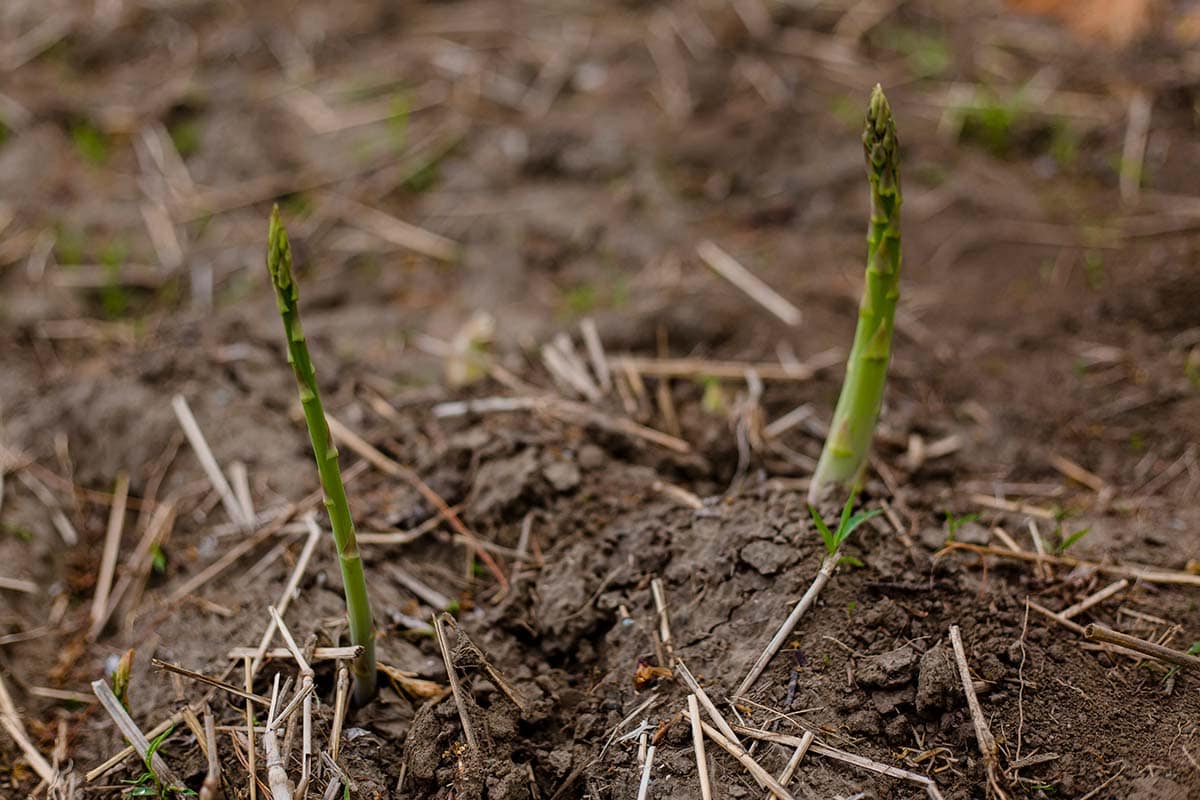
Across Western Massachusetts, from the south end of the Pioneer Valley up through Greenfield and beyond, it comes in at slightly different times depending on the fields and the weather. You’ll hear about it first, then you’ll start seeing it, and within a week or two it’s everywhere.
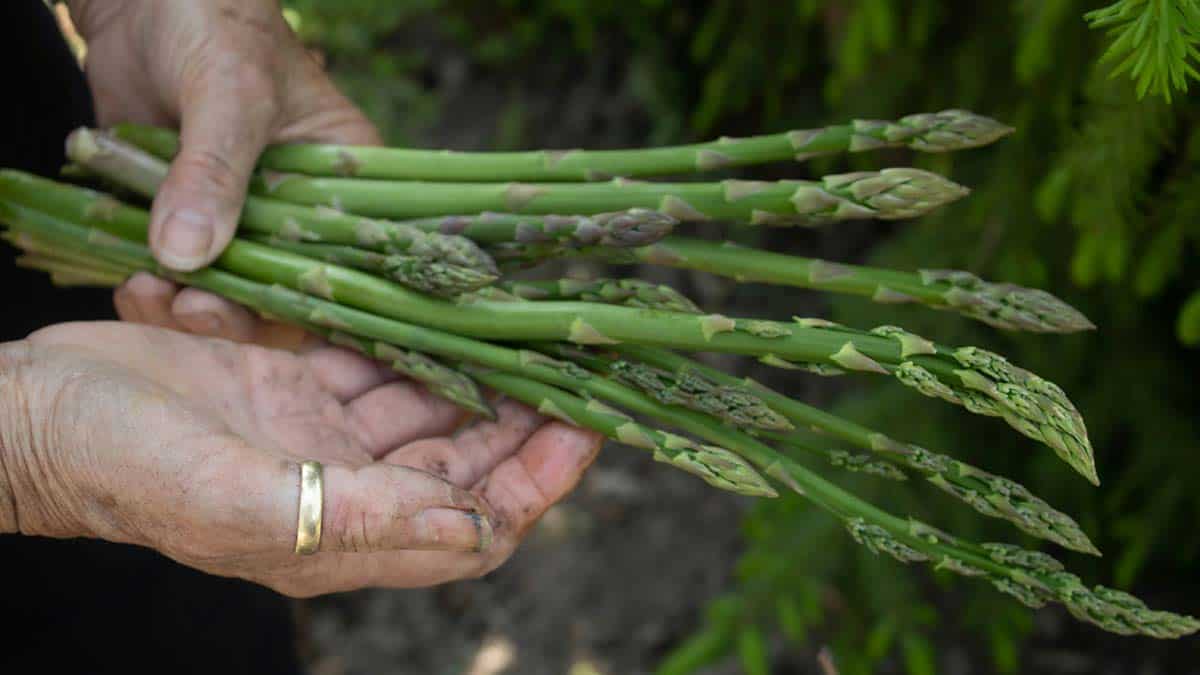
The first bunches are uneven. Some stalks are thin, some thicker, a little crooked here and there. Nothing lined up perfectly. You’ll see that right away at Millstone Market, especially early in the run when it’s just starting to come in from nearby fields.
That’s not a problem. It’s how it’s supposed to be.
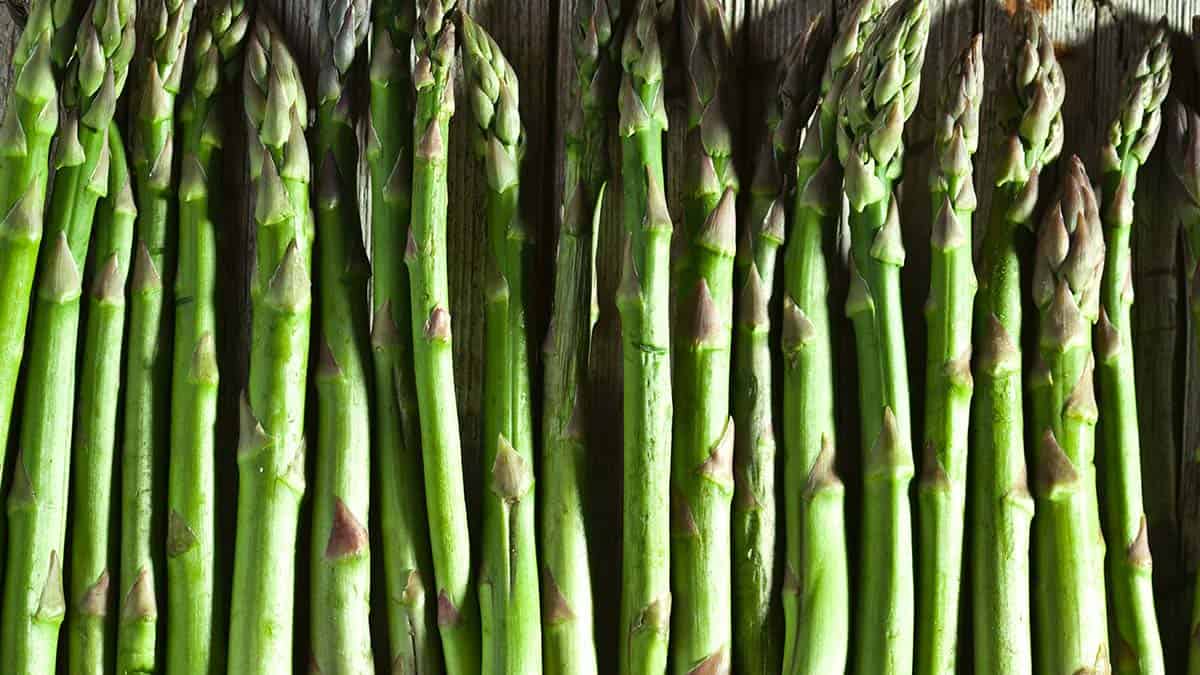
Sort it when you get home. Thin with thin, thick with thick. The thinner stalks will be ready almost immediately once they hit the pan. The thicker ones need a little more time, or at least a head start.
The season itself doesn’t stretch very far.
Six weeks, maybe eight if things line up. It comes on, builds quickly, and then you’re into something else. Corn, tomatoes, whatever’s next. You don’t really ease out of asparagus. One week it’s everywhere, the next it’s not.
And it doesn’t always come in cleanly.
A few warm days will push it up fast. Then a cold stretch hits and everything slows down again. At Warner Farm, they were already cutting some early growth this year, then had to mow it back when the temperatures dropped and start the cycle again. That’s just how it goes. You don’t control it. You work with it.
So when it’s good, you buy it.
Local asparagus has a few tells. Bend a stalk and it snaps fast, no bend, no slow tear. The tips stay tight. The color holds. It cooks quickly and doesn’t fall apart unless you let it go too long.
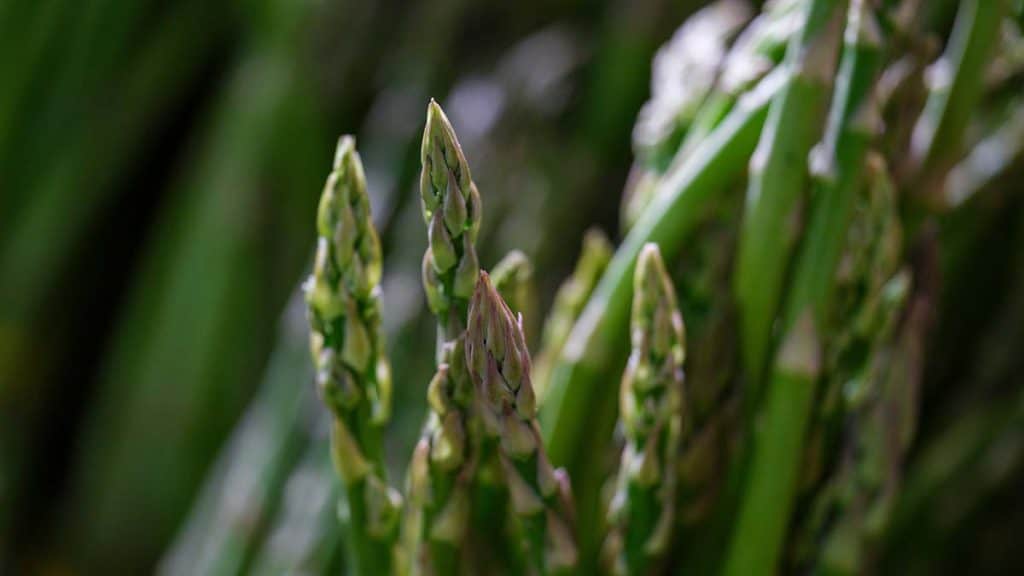
If you’re standing at the table looking over a few bundles, start with the tips. They should be compact, not soft or spreading. Then look at the ends. If they’ve dried out and gone a little gray, it’s been sitting. If they still look fresh, or have been kept in a bit of water, that’s better.
That’s most of it.
The rest comes down to how quickly it moved from the ground to where you’re buying it. Around Sunderland, a lot of what you’re seeing is coming from nearby fields, with harvests moving up the valley as the days warm. It doesn’t travel far. It doesn’t sit in cold storage for long stretches. That’s what keeps it from turning stringy or flat.
Once you get it home, don’t wait too long.
A quick rinse is fine. Some people soak it for a few minutes in cold water, just to freshen it up. Not long. You’re not trying to soften it before you cook it. Trim the ends after that and let it dry off for a minute.
Then cook it.
The early, thinner asparagus:
You don’t need much time. Thirty seconds in boiling water if you’re blanching, then straight into a hot pan with olive oil. Garlic if you want it. Salt, pepper, done. Two minutes, maybe less. It should still have some bite when you pull it.
The thicker stalks:
Take a peeler to the lower portion. Just the outer layer. Drop them into boiling water or steam them briefly, then finish them in a pan or under higher heat. They can take it. You can roast these without worrying too much.
Either way, don’t walk away from it.
Asparagus doesn’t give you much warning. It goes from just right to overdone quickly. If you can smell it across the kitchen, you’re already pushing it.
Once it’s cooked, leave it mostly alone.
Butter works. Olive oil works. A squeeze of lemon if you want it. You can add cheese, herbs, whatever you like, but the first bunch or two each season usually ends up simpler than that.
That’s where you notice it.
You wait for it to come in, you buy it while it’s good, and you cook it the same day if you can manage it.
That window doesn’t last very long.